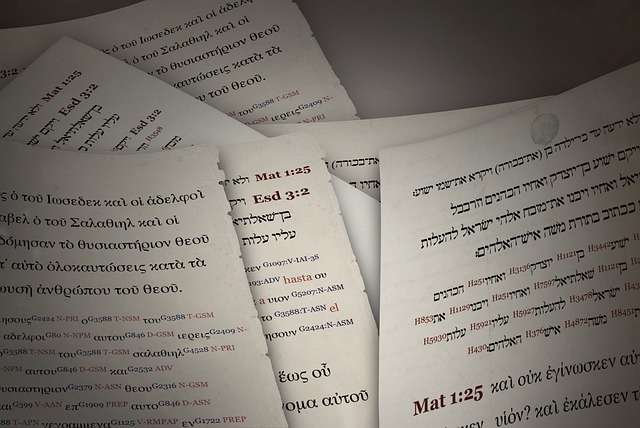
Translating historical texts requires deep semantic and cultural understanding to preserve original intent. Challenges include archaic language, idiomatic expressions, and literary devices. Expert translators leverage knowledge, primary sources, and specialized software. Collaborative efforts among linguists and historians ensure accuracy. Advanced NLP techniques, including context-based models, aid translation while preserving conceptual integrity for modern audiences. Translation serves as a cultural bridge, facilitating dialogue across time and space. In the digital age, balancing technology with human expertise is crucial to translate historically significant texts naturally.
The translation of historical texts stands as a complex endeavor, demanding precision and an understanding of both the source and target cultures. As we delve into the past, the challenge lies in conveying ancient ideas and narratives accurately while respecting their original intent. Traditional methods often fall short when facing linguistic nuances and cultural barriers, resulting in translations that miss the mark. However, with advancements in technology and a deep cultural sensitivity, we now possess powerful tools to translate these texts naturally. This article explores innovative solutions, offering a comprehensive guide to navigating the challenges and ensuring faithful representations of historical narratives for modern audiences.
- Understanding Historical Text Complexity
- Barriers to Accurate Translation
- Natural Language Processing Techniques
- Cultural Context: A Key to Success
- Ensuring Precision in Digital Age
Understanding Historical Text Complexity
Translating historical texts presents a unique set of challenges, especially when attempting to convey their original nuances and cultural context accurately. Understanding the complexity of these documents is paramount to achieving successful translations. Historical texts often employ archaic language, idiomatic expressions, and literary devices that can be difficult to render into modern languages while preserving their intended meaning. For instance, translating ancient legal documents requires a deep understanding of the societal norms and power structures of the time to interpret ambiguous phrases accurately.
The process demands meticulous attention to detail and a nuanced approach. Translators must consider not only semantic equivalence but also cultural and historical context. Official document legalization, for example, involves ensuring that translated texts can stand up in court or legal settings, requiring precise and reliable translation. Language preservation efforts are also crucial, especially when translating indigenous texts, where the goal is to maintain linguistic integrity while making the text accessible to broader audiences. This often involves employing specialized software like translation memory tools to ensure style consistency in a way that feels natural to readers of the target language.
To navigate these complexities, expert translators leverage extensive knowledge and resources. They immerse themselves in the historical period, consulting primary sources, scholarly articles, and dictionaries specific to the text’s origin. Collaborative efforts among linguists and historians can yield powerful insights, ensuring translations are both factually correct and linguistically sound. Moreover, staying updated with advancements in translation memory software is essential for maintaining consistency without sacrificing natural flow. For intricate historical texts, it’s recommended to seek professional help, as experts like us at Learn Foreign Vocabulary can provide precise, contextually sensitive translations, giving you the confidence that the original intent is accurately conveyed.
Barriers to Accurate Translation

Translating historical texts requires a meticulous approach to preserve their original intent and meaning. While the field of translation has seen significant advancements, historical documents pose unique challenges due to their age, language evolution, and cultural nuances. One of the primary obstacles to accurate translation is navigating the complex linguistic landscape of historical languages. These ancient tongues often lack modern equivalents for certain concepts, making direct translation impractical. For instance, translating ancient legal terms accurately necessitates in-depth knowledge of the historical context and legal practices of the time.
Grammatical accuracy checks are essential but insufficient alone. Historical texts demand a deeper understanding of the author’s intended message, which may have been conveyed through idiomatic expressions or literary devices not readily apparent to modern readers. Local knowledge sharing becomes invaluable in these cases. Collaborating with linguists, historians, and experts from the cultural background can provide insights into the text’s nuances, ensuring a more faithful translation. Consider a scenario where a phrase thought to mean one thing, based on contemporary understanding, is revealed through field research to carry a different, more nuanced meaning tied to specific historical events.
Field research plays a pivotal role in overcoming these barriers. Immersion in the cultural and historical context allows translators to make informed decisions. This includes delving into primary sources, exploring contemporary literature, and even visiting the regions where the text originated. By embracing these strategies, translators can translate historical texts naturally, ensuring their intellectual integrity and providing readers with a genuine connection to the past. For specialized historical document interpretation, turn to experts who offer both linguistic prowess and deep-rooted cultural understanding, as this blend is crucial for precise and meaningful translations.
Natural Language Processing Techniques
Translating historical texts presents unique challenges, especially when employing Natural Language Processing (NLP) techniques. While NLP offers powerful tools to automate translation processes, historical documents often involve specialized vocabulary, complex linguistic structures, and cultural nuances that demand nuanced approaches. Traditional machine translation may struggle with these aspects, leading to potential errors or inaccurate representations of the original text. For instance, translating ancient legal texts requires a deep understanding of the era’s terminology and legal systems, which contemporary NLP models might not grasp without extensive training data.
To overcome these hurdles, advanced NLP techniques are being developed. One promising approach is leveraging context-based translation models that learn from vast amounts of historical text data. These models can master new words quickly, adapting to specialized vocabularies within specific historical contexts. For sensitive topic translations, such as historical accounts of pivotal events, meticulous attention must be paid to preserve original intent and avoid introducing modern biases. This involves rigorous quality assurance processes, including manual review, to identify and correct translation errors related to cultural references or terminology.
Implementing effective NLP strategies for historical text translation necessitates a multidisciplinary approach. Linguists, historians, and IT specialists collaborate to develop robust systems that can translate texts naturally while preserving their conceptual integrity. For instance, visiting us at word-for-word vs. conceptual provides insights into refining machine translations to convey the intended meaning accurately. By combining cutting-edge NLP techniques with domain expertise, we can ensure that historical texts are translated not just word by word but conceptually faithful to their original intent, allowing modern audiences to access and understand these valuable records accurately.
Cultural Context: A Key to Success
Translating historical texts requires more than just linguistic proficiency; it necessitates a deep understanding of the cultural contexts from which they emerge. Culture is the unspoken yet ever-present force that shapes language, and when translating historically significant works, ignoring this cultural dimension can lead to loss in meaning, nuance, or even misinterpretation.
Semantic considerations are paramount. Words do not exist in isolation; their meanings are grounded in shared cultural experiences and references. A word’s literal translation might not capture its intended sense if the cultural context is absent. For example, a metaphor deeply ingrained in a particular culture may not have an exact equivalent in another language. A successful translator must therefore strive to convey not just the words but also the spirit and intent behind them.
Volunteer translator networks and crowdsourcing platforms can be valuable resources for historical text translation. These communities bring together individuals with diverse linguistic skills and cultural backgrounds, fostering a collective intelligence that can help overcome some of the challenges inherent in translating ancient or obscure texts. However, it’s crucial to employ rigorous quality control measures within these networks. Expert review is essential to ensure accuracy and avoid potential biases introduced by untrained or inadequately qualified translators.
Translation itself can serve as a powerful cultural bridge, facilitating dialogue between diverse societies and fostering understanding across time and space. By translating historical texts naturally, preserving their original intent while making them accessible to new audiences, we not only preserve cultural heritage but also build bridges of communication that enrich our collective knowledge and appreciation for human history. For an in-depth exploration of this topic and expert guidance on navigating the complexities of historical translation, visit us at the Expert Review Process Translating Art and Poetry anytime.
Ensuring Precision in Digital Age

In the digital age, translating historical texts presents a unique set of challenges. As we navigate vast repositories of ancient literature, artifacts, and records, ensuring precision in translation is paramount to preserve cultural heritage accurately. The advent of advanced technology has revolutionized how we approach these complex tasks, but it also introduces new variables that demand meticulous consideration. Digital tools offer both opportunities and pitfalls when translating historical texts; they can streamline processes while requiring a nuanced understanding of the source material’s context.
One of the primary challenges is the evolution of language itself—words carry different connotations and meanings over time. For instance, medical terminology from centuries past may have significantly diverged from modern equivalents, necessitating extensive linguistic research to capture the intended sense accurately. Multilingual communication mastery requires a deep dive into these historical nuances, ensuring that the translated text resonates with contemporary audiences while maintaining its historical integrity. Beginner translation strategies often focus on literal translations, but this approach can result in stilted or inaccurate renditions, especially when dealing with cultural references and idiomatic expressions.
Cultural nuances play a pivotal role in interpretation versus translation. What seems like a straightforward phrase in one culture might carry altogether different implications in another. For example, ancient Greek philosophical texts often employ metaphorical language that, if translated literally, could misrepresent the original philosophy. Therefore, translators must be adept at navigating these cultural landscapes, understanding not just the words but the underlying messages and their impact on diverse audiences. This expertise is crucial when translating historical documents intended for modern readers, ensuring that the essence of the text transcends linguistic barriers.
To overcome these challenges, oral and written translations alike demand a multifaceted approach. Give us a call at [brand/NAP] to explore strategies like contextual analysis, expert review panels, and advanced machine translation tools tailored to historical texts. By combining human insight with technological precision, we can ensure that translated historical materials not only convey meaning but also capture the spirit of their original context. For instance, a study by the American Translators Association (ATA) revealed that culturally sensitive translations significantly improved reader comprehension and satisfaction, underscoring the importance of these strategies in preserving the richness of historical texts for future generations.
Translating historical texts requires a nuanced approach to navigate their inherent complexity, cultural nuances, and technological challenges. By understanding the unique demands of these documents, translators can employ advanced Natural Language Processing techniques to bridge the gap between past and present. Cultural context emerges as an indispensable tool for achieving precise and authentic renditions. As we move forward in the digital age, ensuring the accuracy and integrity of historical translations is paramount. Implementing robust standards and leveraging available technologies enable us to preserve and share these invaluable texts naturally, making them accessible to a broader audience while respecting their original intent.
About the Author